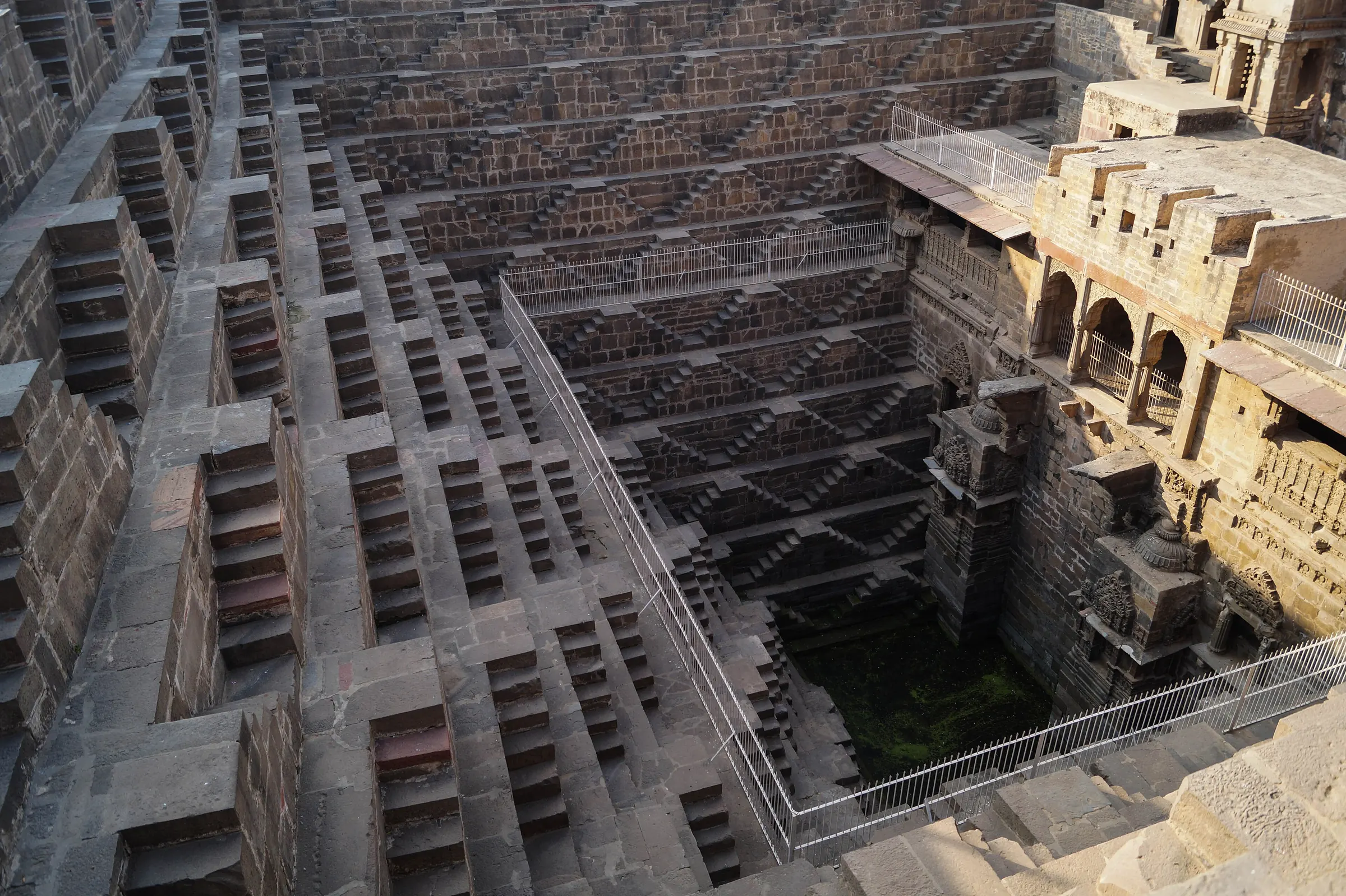
Chand Baori, Abhaneri: thousands of steps descending in a criss-cross pattern to the water
The Architectural Inheritance · Volume I

The Architecture of Water

What time has taught us to build.

Chand Baori, Abhaneri, Rajasthan

Long before India built upward, it built downward.

Across the dry west of Bharat, people carved deep into the earth to meet the water. On the way down, they made some of the most beautiful architecture this country has ever known: places to draw water, to rest in the shade, to pray and to meet.

The Architectural Inheritance is our study of those places. We travel to them, ask why they were made the way they were, and carry what still matters into the homes we imagine today. Not by copying their forms, but by understanding them.

I

Rediscover

Go to the places India built with stone, water, light and ritual.

II

Understand

Ask why they were made this way: climate, craft, purpose and the life they held.

III

Reimagine

Carry the principle forward, never the costume.

Five sites

Five places. Five questions.

  1. 01Chand BaoriCan repetition become monumental?
  2. 02Rani ki VavCan a utility carry a story?
  3. 03Surya KundCan geometry shape a journey?
  4. 04Adalaj ni VavCan a descent change the climate?
  5. 05The Hampi tankCan pure geometry feel ceremonial?
01 · Abhaneri, Rajasthan

Chand Baori

Can repetition become monumental?

Traditionally dated to the ninth century, Chand Baori drops some thirteen storeys into the earth. Around three thousand five hundred narrow steps run down three of its sides in a criss-cross pattern, so precise that the eye cannot settle on any one of them. On the fourth side rise the pavilions.

It was built to hold water through the dry months. It also stayed cool when nothing else did, and so it became a place where people gathered.

What we carry forward

A building can be experienced through descent, not only height. A single element, repeated with discipline, can become monumental.
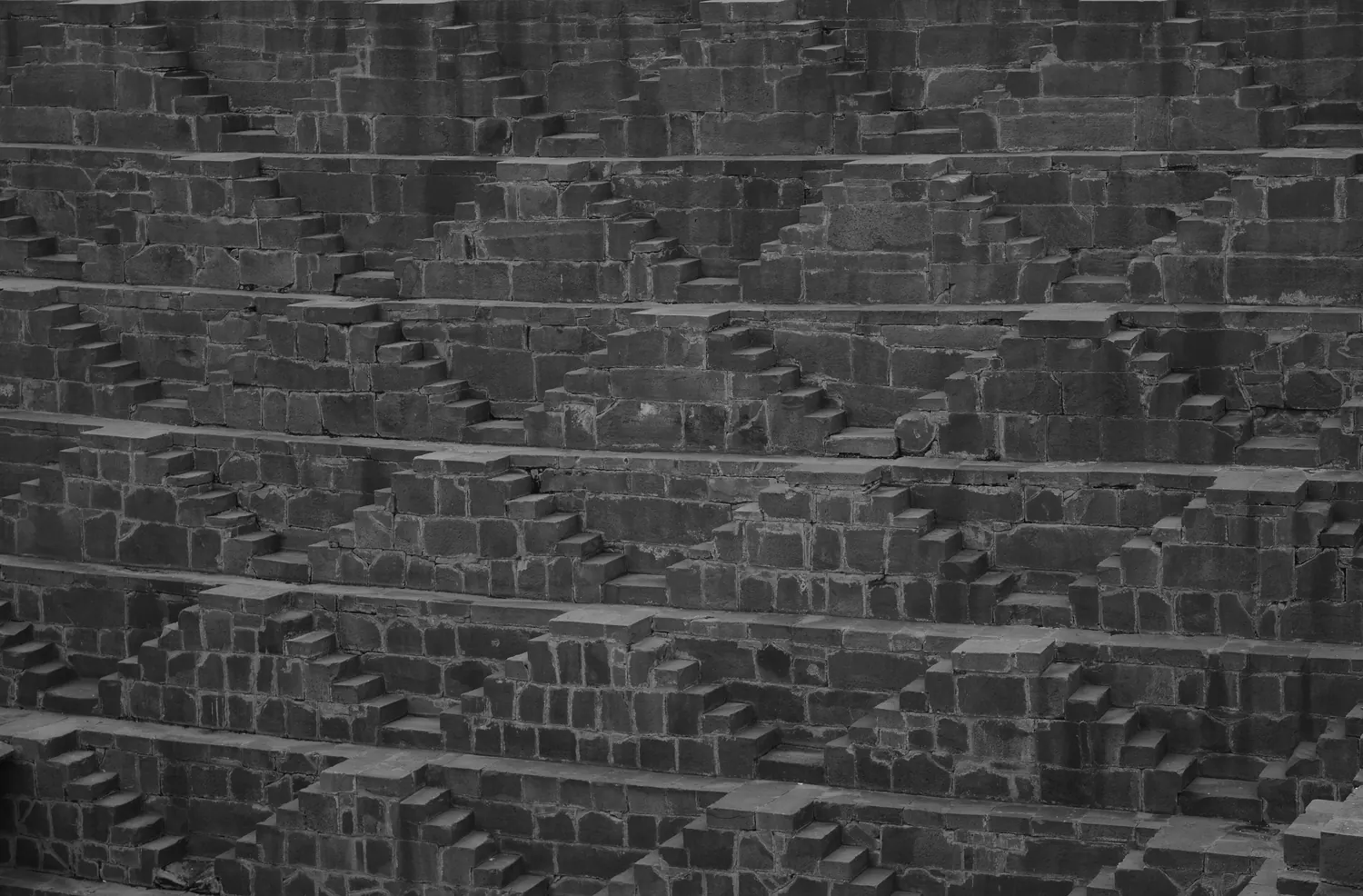
The geometric pattern of steps at Chand Baori in black and white
The steps, repeated until they become pattern
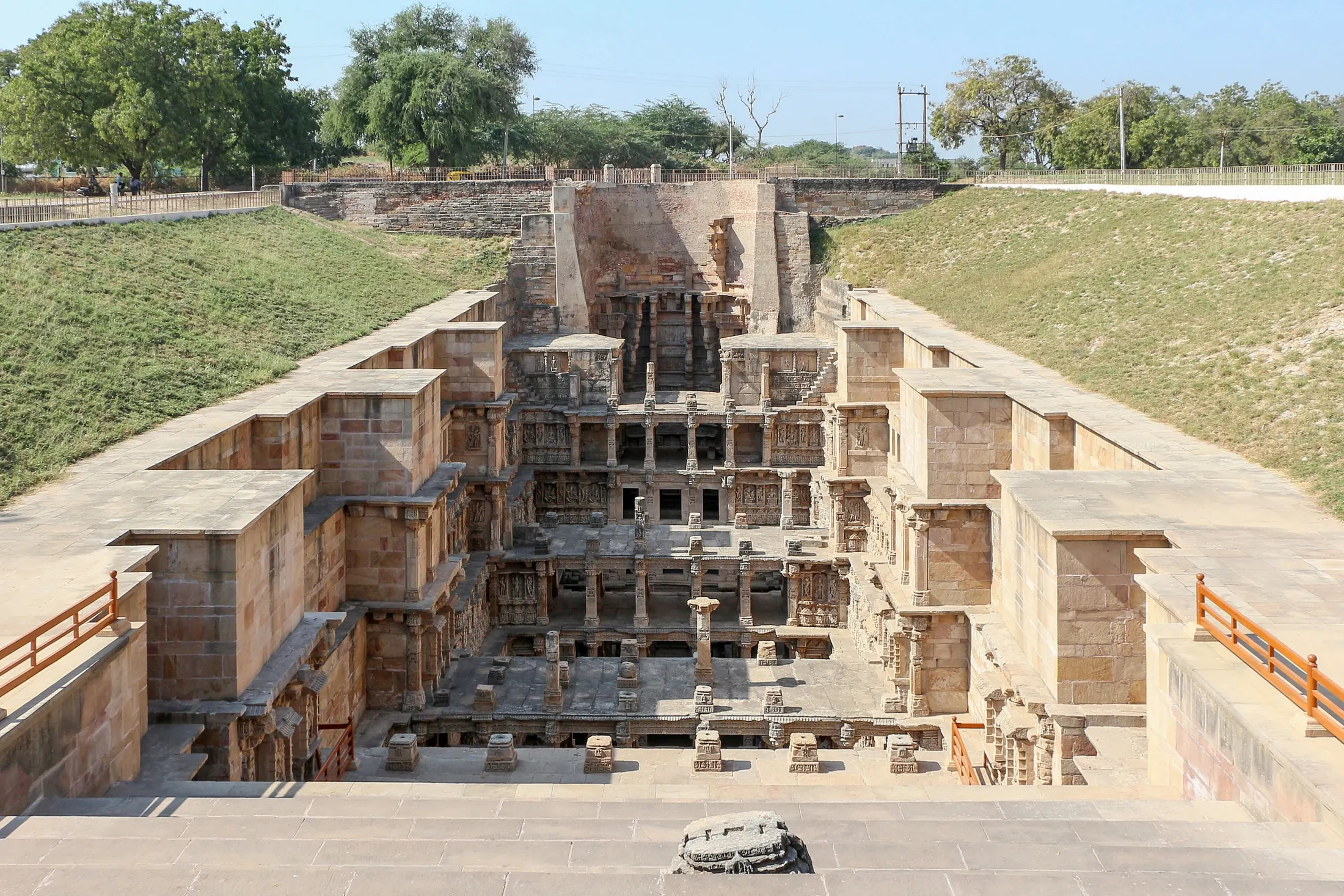
Rani ki Vav, Patan: the stepped corridor descending through pavilions to the well
Rani ki Vav, Patan, Gujarat
02 · Patan, Gujarat

Rani ki Vav

Can a utility carry a story?

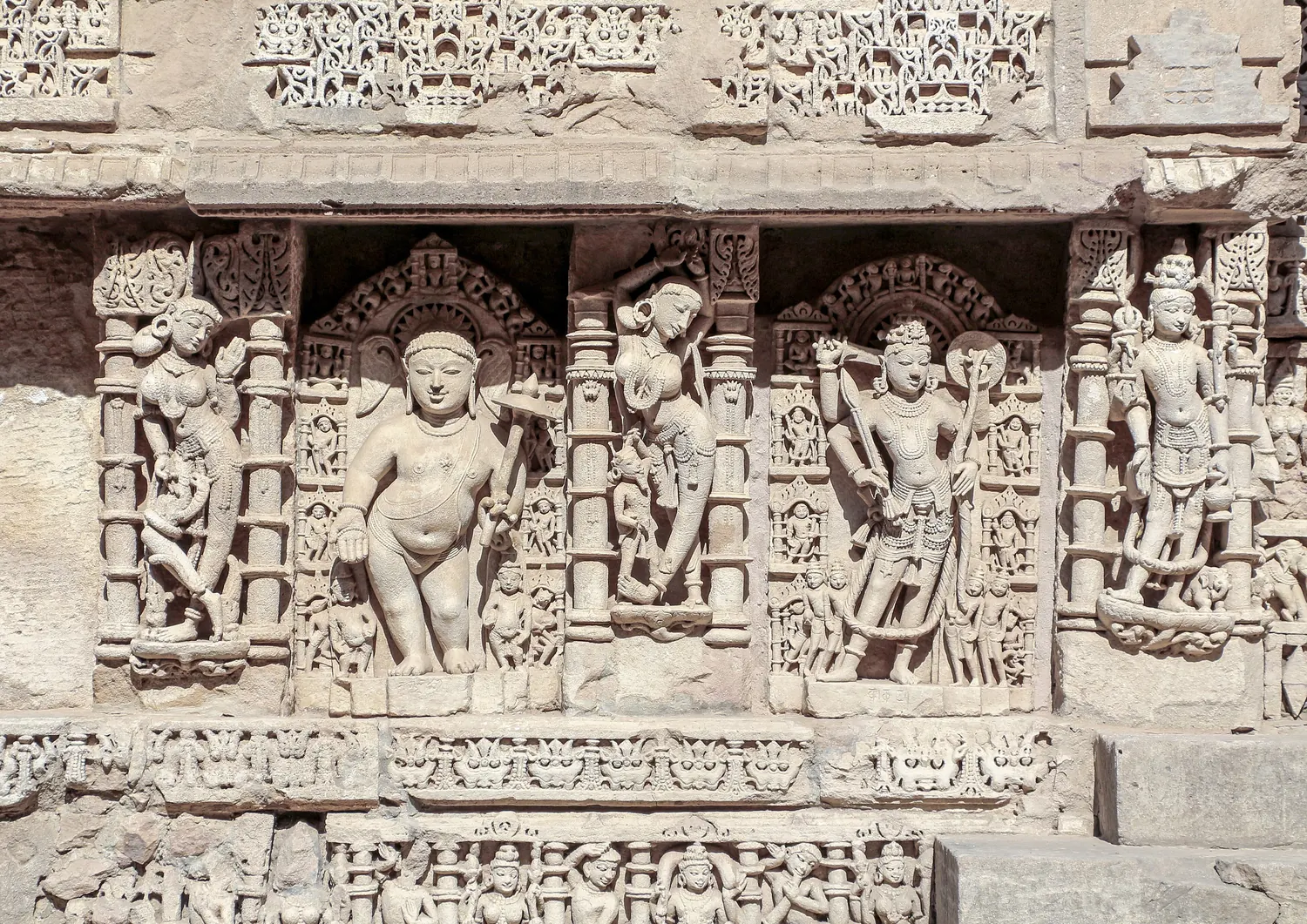
Built in the eleventh century and now a UNESCO World Heritage Site, the Queen's Stepwell is designed as an inverted temple. As you descend its seven levels, hundreds of carved figures of gods, goddesses and celestial dancers accompany you down to the water.

A place for drawing water was given the full devotion of a temple. Nothing about its purpose was considered too ordinary for beauty.

What we carry forward

A home can reveal itself as a sequence of chapters. Ornament should carry meaning from the culture it comes from, never be pasted onto a shell.

Carved sculptures of deities in the walls of Rani ki Vav
Figures carved into the descent
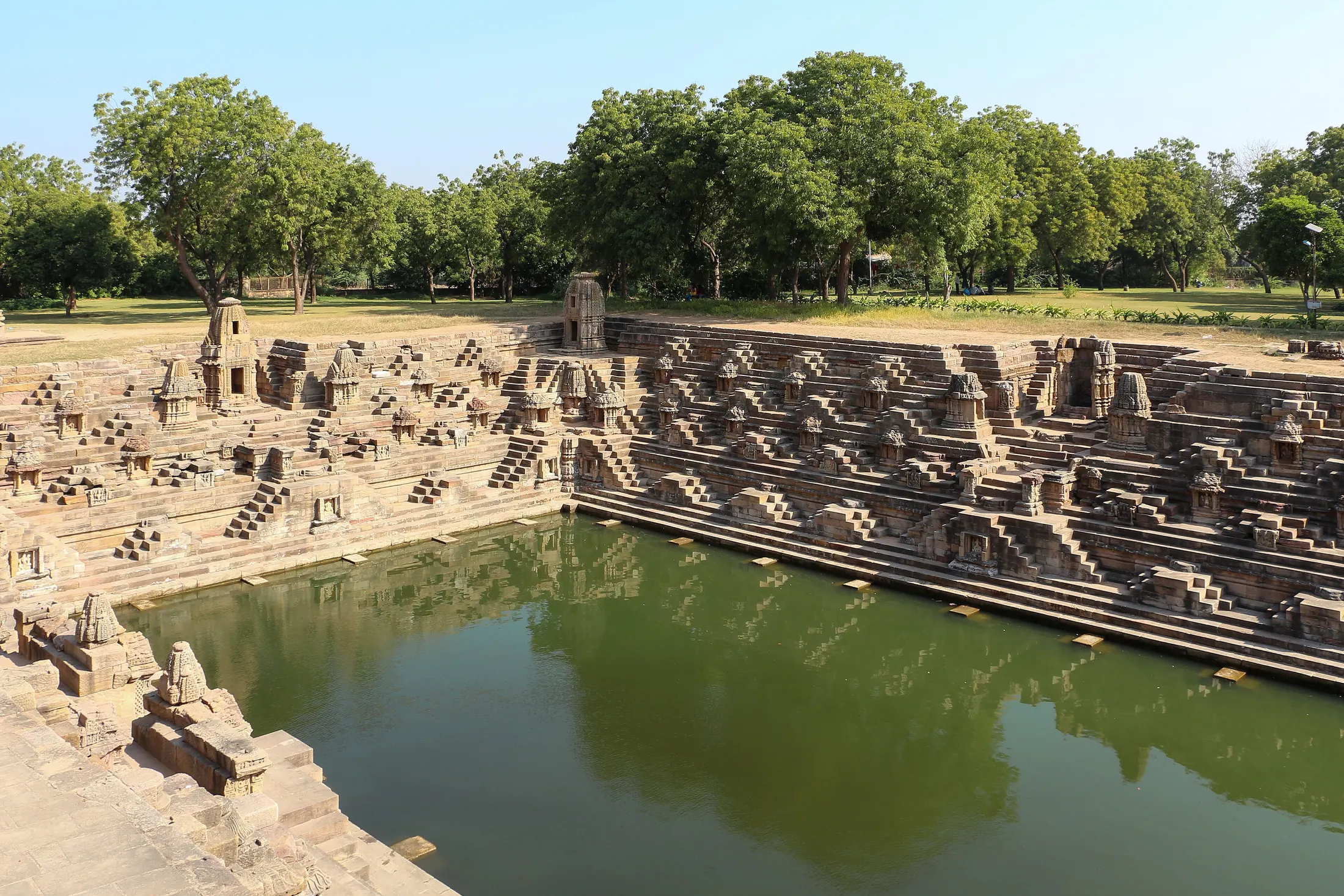
Surya Kund at Modhera: a stepped tank lined with small shrines, holding still green water
Surya Kund, Modhera, Gujarat
03 · Modhera, Gujarat

Surya Kund

Can geometry shape a journey?

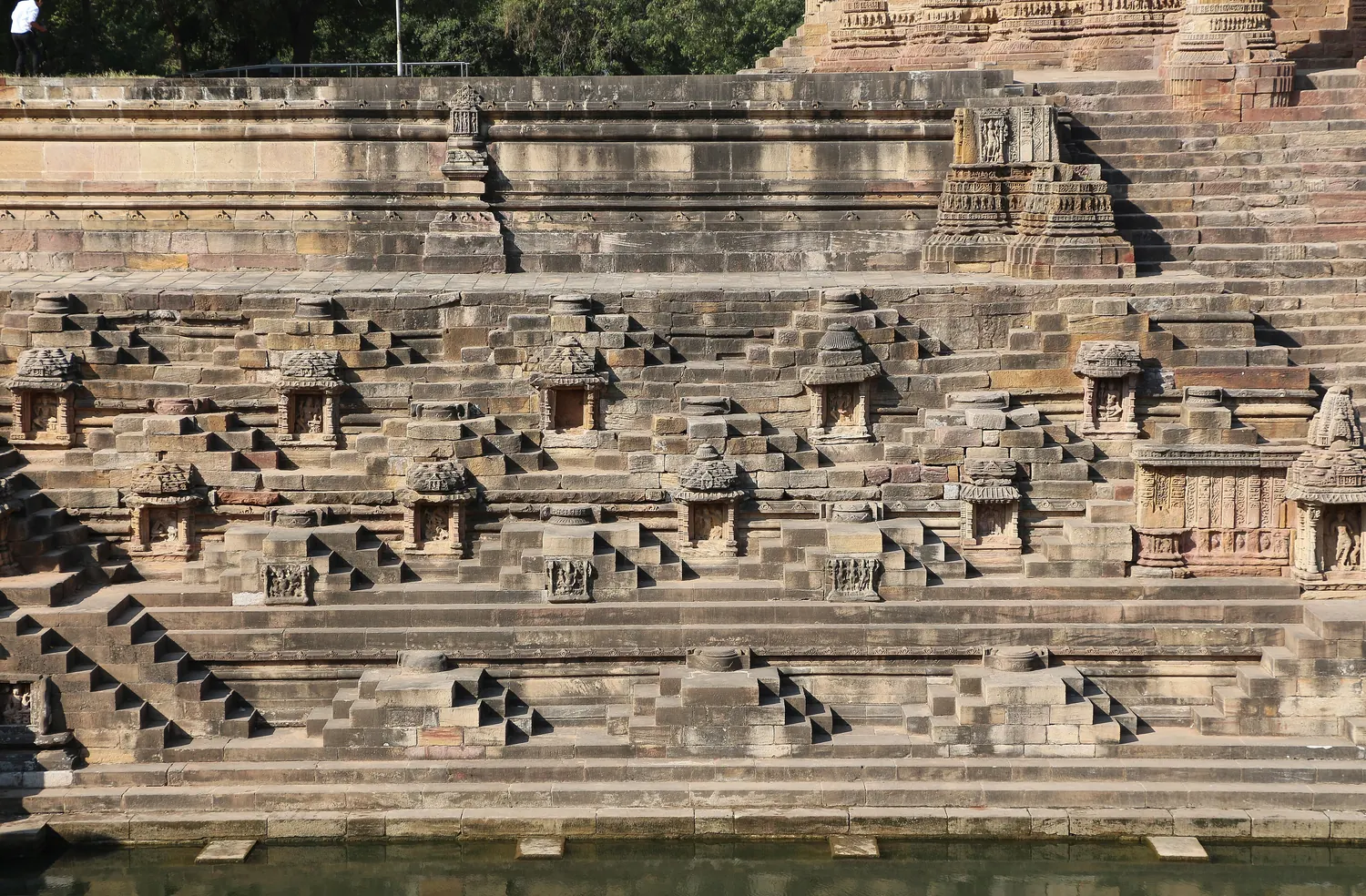
Before you reach the Sun Temple at Modhera, built in the early eleventh century, you meet its tank. Terraces of stone steps fold down to the water in a precise geometric rhythm, and more than a hundred small shrines are set into them.

The tank is not an amenity beside the temple. It is the beginning of the approach: you arrive, descend, pause at the water, and only then go on.

What we carry forward

Water can anchor the journey through a place: arrival, threshold, gathering, pause and private retreat, each with its own dignity.

Rows of stepped terraces and small shrines along the edge of Surya Kund
Steps and shrines in geometric rhythm
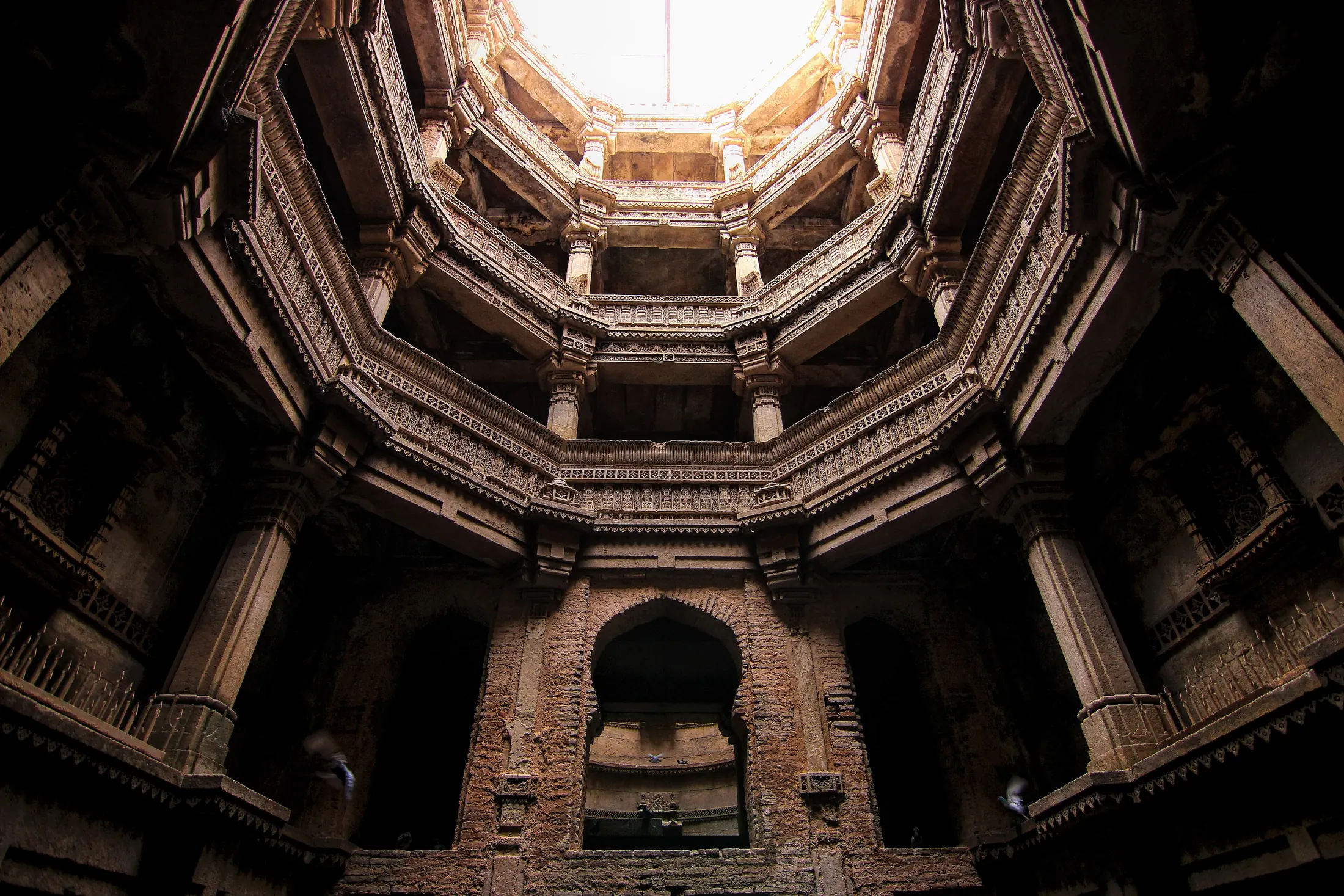
Looking up through the octagonal well shaft of Adalaj stepwell, carved storeys rising to the sky
Adalaj ni Vav, Gandhinagar, Gujarat
04 · Gandhinagar, Gujarat

Adalaj ni Vav

Can a descent change the climate?

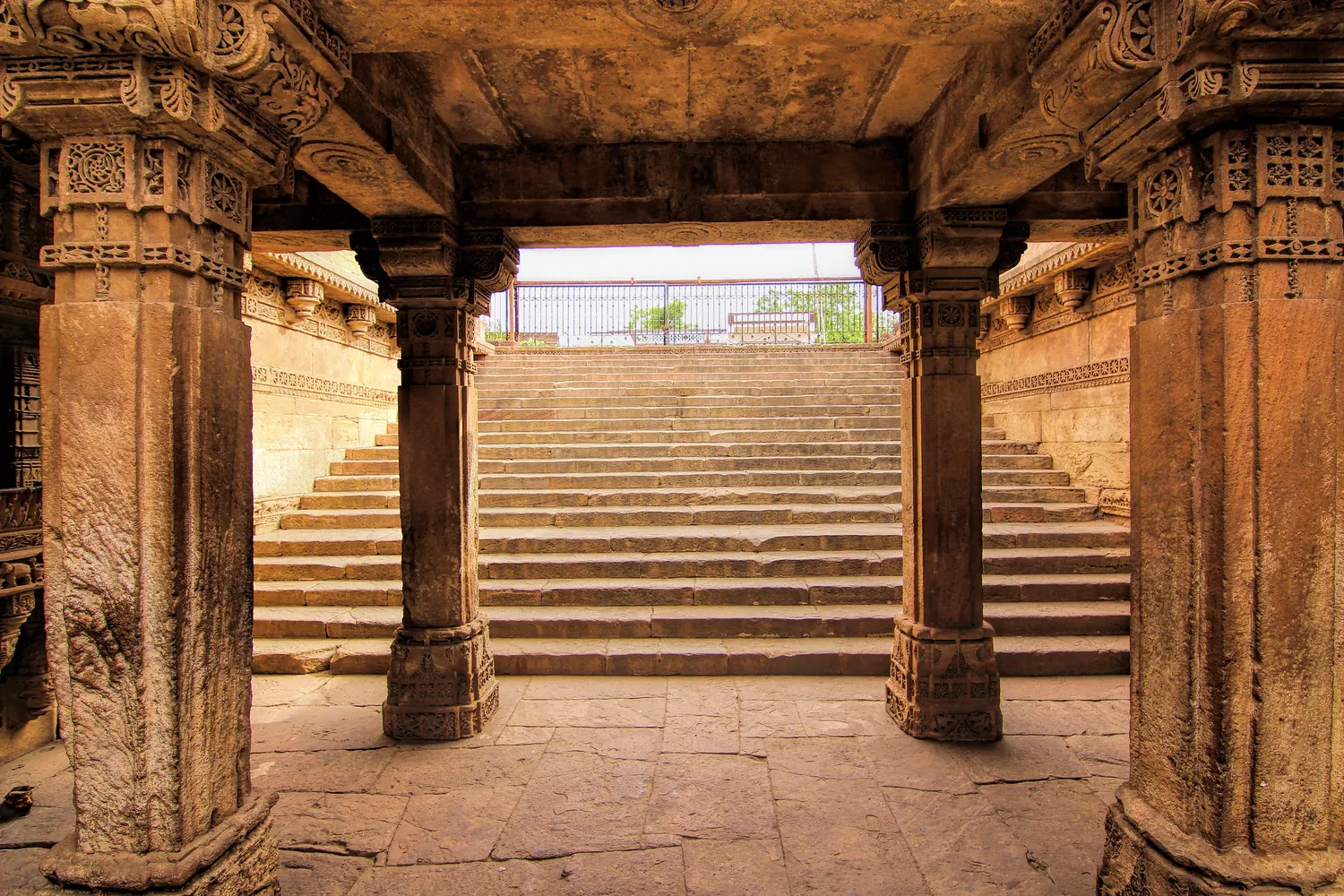
Completed in 1498, Adalaj descends five storeys through carved pillars and galleries. Openings in its ceilings, octagonal at the well, let light and air fall into the depths while the steps themselves stay out of the direct sun.

Step inside on a summer afternoon and the air changes. The architecture itself is the cooling.

What we carry forward

A threshold can be a climate device: light from above, cool shadow below, and a measured passage from street to sanctuary.

A shaded pillared pavilion at Adalaj opening onto bright steps
Shade first, then light
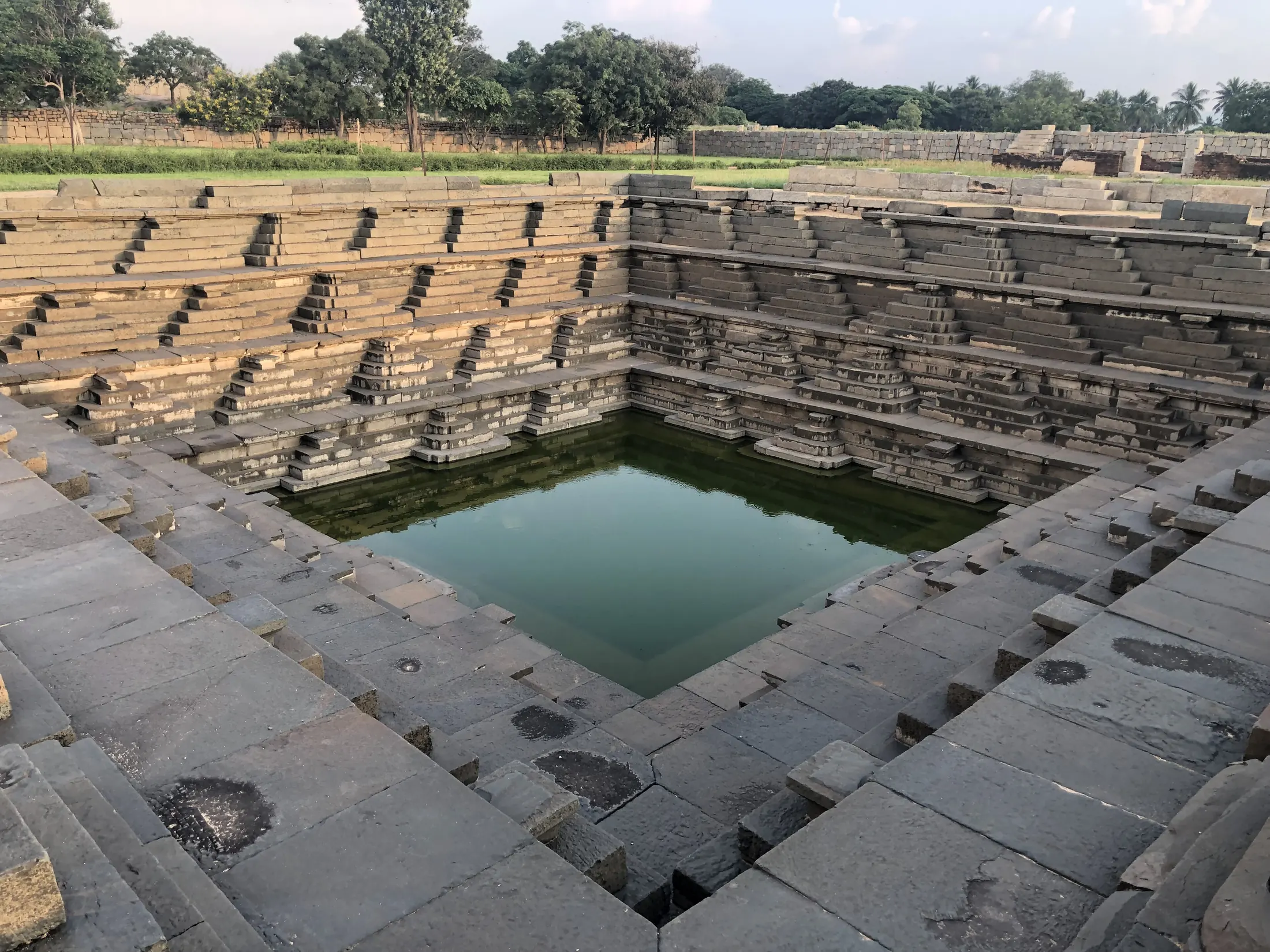
The square stepped tank in the Royal Enclosure at Hampi, its dark stone steps descending to water
Stepped tank, Royal Enclosure, Hampi, Karnataka
05 · Hampi, Karnataka

The Hampi tank

Can pure geometry feel ceremonial?

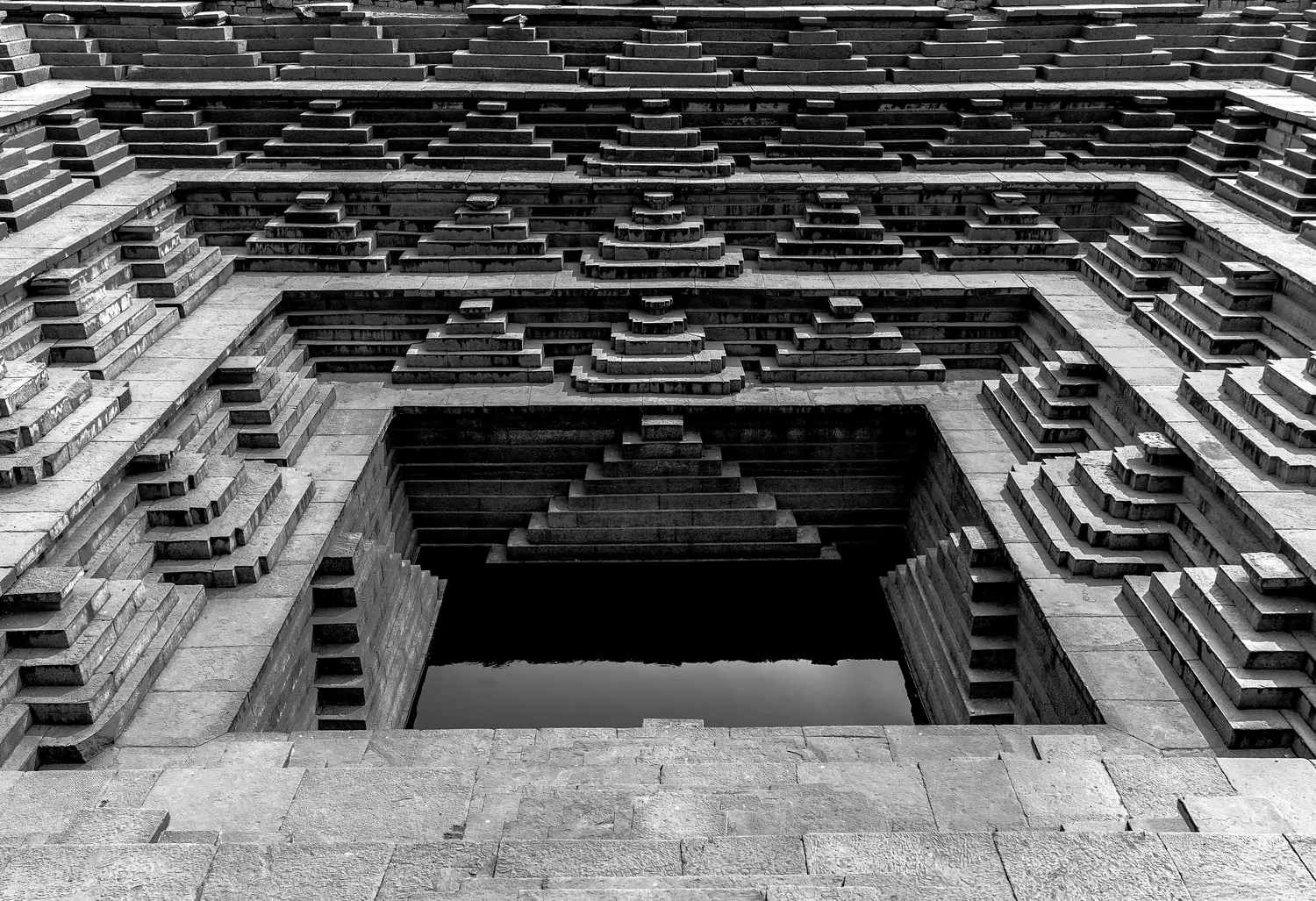
Inside the Royal Enclosure of Vijayanagara lies a small stepped tank, brought back to light by excavation in the 1980s. It is square, built of finely dressed dark stone, and its steps fold inward in perfect, diminishing squares.

There is almost no ornament. The precision is the ornament.

What we carry forward

The simplest geometric system, carefully proportioned and honestly built, can create a memorable courtyard without borrowed decoration.

Looking down into a Hampi stepped tank in black and white, steps folding inward
Squares within squares
What we carry forward

Five places. Five lessons.

PlaceWhat it knewWhere it could live today
Chand BaoriRepetition, shadeTerraced gardens, places to gather
Rani ki VavStory told in sequenceLayered arrival, craft with meaning
Surya KundRitual, geometryWater courts, a ceremonial approach
Adalaj ni VavAir, filtered daylightSunken retreats, cooling thresholds
The Hampi tankPrecision, modularityA quiet stepped courtyard

Not reinventing India. Rediscovering its foundations.

Field notes

We will add a field note from each site as we visit: what we saw, and what we are still asking.

Already in our stories

Brahmanda. A stepwell carved into the earth, where every lesson on this page comes home.

Next volume

Volume II · The Architecture of Light. Jaalis, courtyards and the shade of a gallery.

Back to our stories
Photographs

Photographs from Wikimedia Commons, used under Creative Commons licences and resized for this page. Historical details are drawn from UNESCO, the Archaeological Survey of India and the Rajasthan and Gujarat tourism departments.